Cart
Your shopping cart doesn't have any products yet!
Free shipping worldwide within 5 days - Delivery in about 20 days

Your shopping cart doesn't have any products yet!
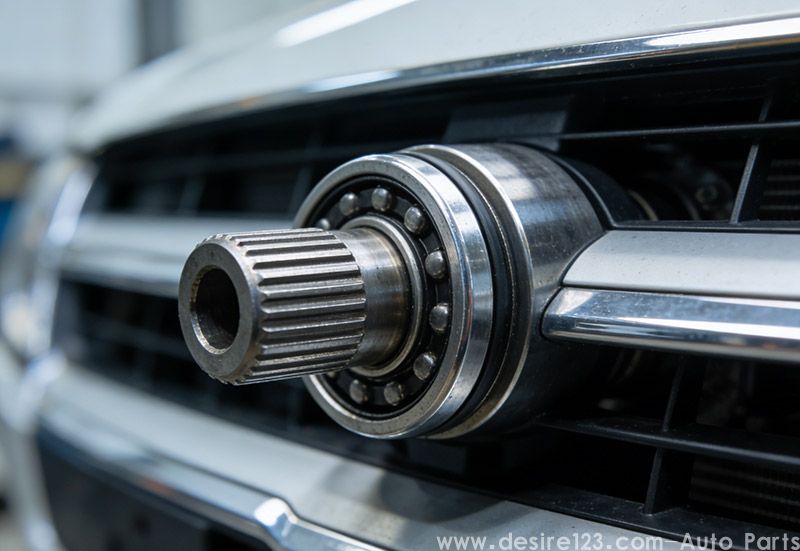
As the automotive industry enters a deep transformation period characterized by electrification, intelligence, and connectivity, the auto parts industry, as the core support of the industrial chain, is undergoing an unprecedented transformation. From the shrinkage of traditional mechanical parts to the explosion of core components for new energy vehicles, from the reconstruction of the global supply chain to the upgrading of car owners' purchasing demands, the auto parts industry has long bid farewell to its role as a "supporting role" and become the "cradle of technology" that determines vehicle performance, safety, and experience. For the majority of car owners, faced with a wide range of accessories and complex brand choices in the market, how to recognize industry trends and choose reliable accessories has become a core demand.Industry transformation: A comprehensive leap from the "mechanical era" to the "intelligent electric era"
By the end of 2025, the global automotive parts market had surpassed $1.4 trillion, and it is expected to exceed $2.1 trillion by 2030, with a compound annual growth rate (CAGR) maintained above 6.5%. This growth momentum has completely bid farewell to the era of traditional internal combustion engines, with over 60% of the industry's new value added being contributed by components related to electrification, intelligence, and connectivity. The industry is exhibiting distinct characteristics of structural transformation.
On the demand side, the demand map for accessories has been completely reshaped. The rapid increase in the penetration rate of electric vehicles has led to the share of the three-electric system (battery, motor, electronic control) and related thermal management and high-voltage wiring harness reaching 28% of total demand by 2025, becoming the core engine of industry growth. Meanwhile, the demand for advanced driver assistance system (ADAS) sensors,domain controllers, and intelligent cockpit modules is surging at a rate of over 20% per year. At the same time, the global trade volume of core accessories for traditional fuel vehicles, such as internal combustion engines and transmissions, has shown a structural decline. It is expected that their share will shrink to less than 15% by 2030, and some traditional accessory suppliers are accelerating their transition to the new energy sector.
On the supply side, the industrial landscape is undergoing drastic upheaval. Traditional tier-one suppliers are increasing their R&D investment, with emerging businesses accounting for an average of nearly 35% in 2025; cross-sector players in the consumer electronics and software fields have already occupied about 25% of the market share in the smart connected accessories segment. The supply chain layout is also showing a trend towards regionalization and nearshoring. Among the new accessory factories built in North America and Europe between 2025 and 2026, over 40% are explicitly serving local electric vehicle production capacity. Furthermore, Chinese auto parts enterprises are accelerating their rise, with companies such as Fuyao Glass,CATL, and Jinqilin achieving technological breakthroughs in niche areas, gradually breaking the monopoly of international brands and becoming an important force in the global auto parts market.
It is noteworthy that industry boundaries are continuously melting, and an integrated ecosystem of "automobile + N" is gradually emerging. Auto parts enterprises not only serve the automotive industry but also extend into areas such as embodied robots and low-altitude economy. Companies like Suteng Juchuang and Huichuan Technology have transformed from "suppliers of automotive sensors" to "solution providers for robot perception". At the same time, the trend of software-defined vehicles is becoming increasingly evident. The proportion of software costs is expected to increase from the current 15% to 60%, driving the demand for more intelligent accessories.
Car owners must read: A guide to avoid pitfalls when purchasing accessories, ensuring both safety and cost-effectiveness
Faced with industry changes and a wide variety of accessories on the market, car owners often find themselves in a dilemma between "price and quality" when making purchases. In fact, the core of accessory selection lies in "compatibility, reliability, and cost-effectiveness". Rational selection based on accessory type and usage scenario can help avoid pitfalls and avoid spending unnecessary money.
Step 1: Determine compatibility to avoid "buying the wrong thing and wasting effort"
The primary principle in purchasing accessories is to confirm compatibility; otherwise, even the best accessories will not be able to function. Car owners can check key information such as the vehicle's model year, displacement, and specific configuration through the driving license, vehicle identification number (VIN), or vehicle user manual to clarify the model and specifications of the accessories (such as brake pad model and engine oil viscosity). Especially for electronic components such as sensors and car systems, some models require coding and matching at a 4S shop after replacement; otherwise, they may not function properly. It is recommended to record the core information of the vehicle in advance or bring along old parts for comparison to avoid wasting accessories due to specification incompatibility.
Step 2: Identify the type of parts and choose as needed without blindly following
Auto parts on the market are primarily categorized into three types: original equipment parts, aftermarket parts, and dismantled parts. These three types exhibit significant differences in quality and price, necessitating a reasonable selection based on the usage scenario:
- Original parts: Produced with authorization from the original equipment manufacturer, these parts are sourced from the same origin as the original vehicle components, ensuring the highest quality. However, they are priced on the higher side. They are ideal for replacing core safety components such as brake pads, brake discs, and steering system parts. It is recommended to purchase these parts through a 4S shop or authorized brand dealer for better after-sales support.
- Aftermarket parts: Produced through non-original channels, their quality varies greatly. High-quality aftermarket parts (brands such as Bosch, Mahle, and Mann-Filter) have performance close to original parts, but at only about 70% of the price. They are suitable for replacing wear parts (such as filters, wipers, and air conditioning filters) and offer excellent value for money. On the other hand, inferior aftermarket parts are often imitations produced by small workshops, which may have issues such as dimensional deviations and inferior materials, potentially posing safety hazards. It is necessary to avoid them.
- Disassembled parts: Used parts removed from scrapped, accident-damaged, or modified vehicles. Disassembled parts in good condition and with low usage frequency (such as modified replacement parts) offer excellent value for money, with prices only being one-third of new parts. They are suitable for car owners with limited budgets who seek original quality. However, it is necessary to strictly screen the sources to avoid parts that have been soaked in water, burned, or have high wear and tear. This can be initially determined by examining screw marks and rust conditions.
Step 3: Identify reliable channels and avoid the risk of counterfeiting
The reliability of the channel directly determines the quality of the parts. Different channels have their own advantages and disadvantages, and car owners can choose according to their needs:
- 4S shop: suitable for replacing original core parts. Although the price is relatively high, the quality and warranty are absolutely guaranteed, making it suitable for car owners who have extremely high quality requirements.
- Online platforms: Brand flagship stores on platforms such as Tmall and JD.com (such as official stores of Bosch and Michelin), which offer reliable product quality, frequent discounts and promotions, and convenient purchasing. They are suitable for the purchase of consumables and regular accessories.
- Offline auto parts city: Prices are flexible, and on-site inspection is available. However, be cautious of counterfeit products. It is recommended to bring old parts for comparison, verify the product anti-counterfeiting code, and choose merchants with good reputation.
Step 4: Keep in mind the key points to avoid pitfalls and maintain the safety baseline
1. Safety components must not be compromised: When it comes to braking systems, steering systems, engine core components, etc., only original parts or well-known brand aftermarket parts should be chosen. Inferior parts must be strictly avoided to prevent safety accidents;
2. Avoid "low-price traps": Accessories priced significantly below the average market price are likely to have issues such as shoddy materials and rough craftsmanship. While they may seem to save money, they may actually lead to secondary repairs, which can increase costs;
3. Keep vouchers to safeguard rights: After purchasing accessories, be sure to retain the purchase voucher, product packaging, and old parts for future rights protection in case of any issues;
4. Professional installation for peace of mind: It is recommended that electronic accessories and core mechanical parts be installed by professionals to avoid improper operation that may affect the use effect or even damage the vehicle.
Recommended premium brands: domestic and international benchmarks, choose as needed for greater convenience
Whether it's a traditional fuel vehicle or a new energy vehicle, choosing accessories from well-known brands can significantly reduce the risk of purchase. Below are benchmark brands in different fields for car owners' reference:
International core brand
Bosch (BOSCH): the world's largest automotive technology supplier, leading in anti-lock braking systems (ABS), electronic stability programs (ESP), and electronic control units (ECU), covering core components for both fuel-powered vehicles and new energy vehicles;
DENSO: A core supplier to Toyota, specializing in fuel injection, air conditioning compressors, and electric drive systems for new energy vehicles, with stable and reliable quality;
Johnson Controls: a leading enterprise in automotive batteries (AGM/lithium-ion) and intelligent cockpit systems, compatible with various vehicle models.
Chinese domestic brands
Fuyao Glass: With a global market share of over 25% in automotive glass, its coating/HUD windshield technology breaks the international monopoly and offers extremely high cost-effectiveness;
CATL: a global lithium battery giant, specializing in power batteries and energy storage batteries, providing supporting products for most domestic new energy vehicle manufacturers;
Jinqilin (LPB): Leading in ceramic brake pad patented technology, compatible with multiple brands such as Volkswagen and Toyota, with quality close to international standards.
Representative in specialized field
Braking system: Brembo, TRW; Suspension system: ThyssenKrupp, Sachs; New energy three electrics: Inovance (electric drive), Infineon (electronic control chip).
Conclusion: Adapt to your needs, choose the right accessories, and protect every journey
The transformation of the auto parts industry is not only an inevitable outcome of technological iteration, but also a result of the upgrading of market demand. For car owners, there is no need to blindly pursue "original" or "high-priced" parts, nor should they compromise safety for the sake of "low price". The key lies in selecting compatible and reliable parts based on the vehicle's condition and usage scenarios.
In the future, with the continuous advancement of electrification and intelligence, the auto parts industry will usher in deeper integration and innovation, and the level of intelligence, integration, and greenification of parts will continue to improve. For every car owner, recognizing industry trends and mastering purchasing skills to choose the right parts is not only a care for the vehicle but also a responsibility for their own travel safety. May every car owner avoid purchasing traps, choose high-quality parts with high cost-effectiveness, keep their beloved cars in optimal condition, and safeguard every safe journey.